Breeds & Health
Finding a Reputable Retriever Breeder
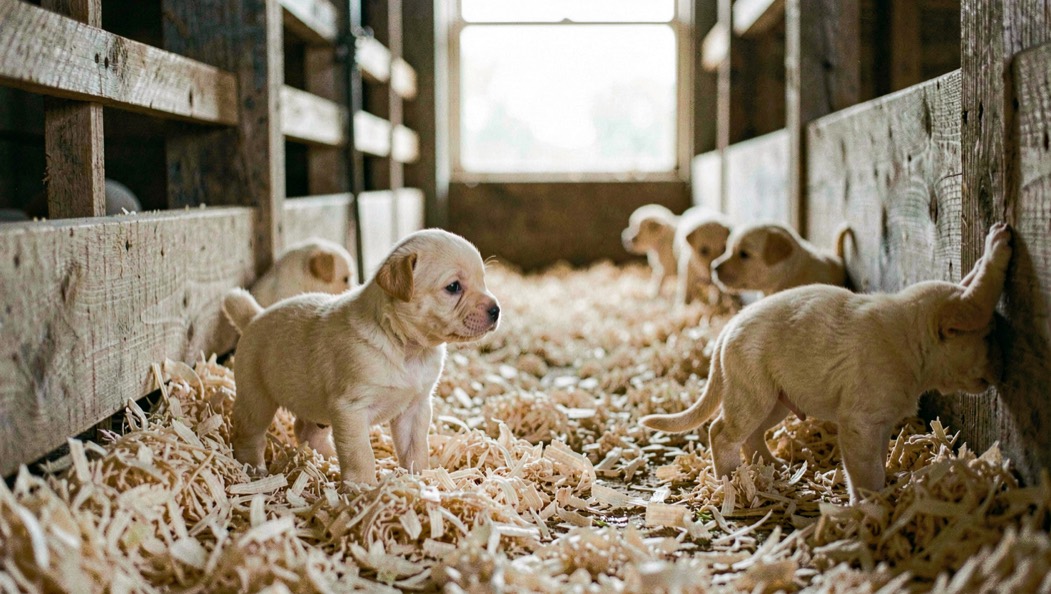
Start with the paperwork, not with the puppies. A grid of documents, titles and questions tells you more in ten minutes than an afternoon of meeting the litter.
Choosing where a working retriever comes from is a paperwork exercise long before it is an emotional one. Ten minutes with the documents of a litter tells you more than an afternoon spent meeting it, because the documents describe decisions taken over years and the puppies describe nothing at all except that they are puppies.
No kennel is named on this site, no litter is listed, no price appears and there is no directory here. What follows is a grid: which documents to ask for, how to read the letters attached to a pedigree, which questions reveal how a breeding program actually works, and which answers should end the conversation. Everything below applies to a dog intended to work.
Start with the clearances, not with the puppies
Ask for the health documents of both parents first, before any conversation about availability, temperament or which puppy might suit you. This is not suspicion. It is simply the only part of the transaction that can be verified, and asking for it first tells you two things at once: what the documents say, and how the request is received.
Read what arrives by family rather than by name. Structural evaluations of hips and elbows are issued once on a mature dog and do not expire. Genetic tests read a fixed result and hold for life, each one covering exactly one mutation. Clinical examinations, of which the eye examination is the one that matters most here, describe a state on a date and have to be repeated. A folder that looks complete but whose eye examinations are years old is not a complete folder. That distinction is set out in full in retriever health clearances, and the examination that expires has its own page in CAER eye screening.
Two further habits are worth building. Ask where each result is recorded rather than accepting an image of a form, because a recorded result can be looked up and an image cannot. And ask for the panel that the breed's registry publishes rather than for the documents the breeder chose to send, since the second list is always a subset of the first.
The documents to ask for, in order
- Structural evaluations for both parents, on mature dogs, with the grading body named.
- The current eye examination for both parents, with the date visible, and the earlier ones if they exist.
- Genetic test results for both parents, with each mutation named rather than described as a panel.
- The registration papers of both parents, matching the names on every other document.
- The pedigree, far enough back to see whether the working titles are recent or ancestral.
- Whatever the breed's own registry publishes as its recommended screening list, so you can compare it with what you were given.
- The written terms of sale, before any money moves.
Reading working titles in a pedigree
A pedigree full of letters is easy to be impressed by and easy to misread. Two conventions do most of the decoding. Titles from the hunting test programs are recorded as suffixes, after the registered name. Field trial championship titles are recorded as prefixes, in front of it. So the position of the letters already tells you which kind of event produced them.
What each one costs is worth knowing, because it converts letters into work done. In the AKC hunting tests, read at the source in the regulations on September 2, 2026, Junior Hunter takes four qualifying scores, Senior Hunter takes five or four if the dog is already recorded as a Junior Hunter, and Master Hunter takes six or five with a Senior Hunter already recorded. Field trial championships are earned by accumulating championship points in the All-Age stakes; the point schedule sits in a rulebook that has not been read at the source here, so no figure for it appears on this site.
| Where the letters sit | What kind of event produced them | What it took | What it does not tell you |
|---|---|---|---|
| Suffix, after the name | Hunting tests, scored against a written standard. | A stated number of qualifying scores at that level. Four, five and six for the three AKC titles, with reductions for a recorded lower title. | How the dog compared with other dogs, since every dog meeting the standard passes. |
| Prefix, in front of the name | Field trials, where dogs are placed against each other. | Championship points accumulated in the All-Age stakes. Schedule not read at the source on September 2, 2026. | Anything about the ground, the weather or the size of the entries the points came from. |
| Letters from another program | Programs that count accumulated points rather than passes. | Points, on schedules published in their own rulebooks and not read at the source here. | Any equivalence with the AKC ladders, which does not exist. |
| No letters at all | A dog that has not been entered, which is not the same as a dog that cannot work. | Nothing recorded. | Nothing either way. Most good hunting dogs have never been entered in anything. |
| Titles three or four generations back | Work done by ancestors. | Whatever it took at the time, under the edition of the rules then in force. | What the parents in front of you have actually done. |
Two cautions apply to the whole table. A title describes a performance, not a prediction: it says what a dog did on several weekends, and a litter is not a copy of its parents. And titles date, because the conditions attached to a title are those of the edition in force when it was earned. The full ladder, program by program, with the reading behind every row, is in working titles explained.
The questions that reveal a breeding program
Documents tell you what was tested. Questions tell you how decisions get made, which is the part that actually varies. Six of them do most of the work, and none is confrontational.
Why this pairing, specifically. A breeder with a program has a reason, and it is usually a sentence about what one parent brings that the other does not. Ask what the breeder wanted to improve and what they were willing to risk to get it. Ask what they would change if they repeated it.
What happened to the previous litters from this line, and how the breeder knows. Ask whether they hear from buyers, whether any dog has come back, and what they know about how those dogs turned out at three and at eight years old rather than at eight weeks. Ask how they choose which home gets which puppy, and on what basis a puppy is allocated at all.
Finally, ask what the breeder wants to know about you. A program that places working dogs asks about your ground, your season, your experience and your intentions, and it asks before it discusses availability. A conversation that never turns around is a transaction rather than a placement.
Answers that should end the conversation
Some answers are simply information, and some tell you to stop. Reluctance to show a document is the clearest of them: a recorded result is public by design, and a request that produces discomfort has already answered itself. So has a claim that a screening is unnecessary in this line, which substitutes a person's confidence for a test.
Two more belong on the list. Pressure to decide quickly, in any form, is a sales technique and not a placement practice. And an unwillingness to put anything in writing, at all, about what happens if something goes wrong, tells you exactly how the relationship will work if something does.
What a written agreement usually covers
Terms vary and nothing here is legal advice, but the subjects that a written agreement normally addresses are consistent enough to be worth listing before you read one. What happens if a health condition covered by screening appears. Whether the dog is placed with any conditions attached to breeding. What is expected of the buyer, and over what period. What happens if the buyer's circumstances change and the dog needs to go somewhere else. And who is responsible for what during the transfer itself.
Read it before money moves rather than after, ask about anything that is vague rather than assuming a generous reading, and keep a copy. Once the dog is home, the work starts immediately rather than at six months, and what belongs in those first months is set out in the first months. What to have bought before the dog arrives is in the puppy supply list.
Common mistakes
- Meeting the puppies first. The visit is the least informative part of the process and the most persuasive one.
- Accepting the documents offered instead of asking for the panel the breed's registry publishes.
- Reading an old clinical examination as current. The eye examination in particular describes a day, not a dog.
- Being impressed by letters without reading where they sit. A suffix and a prefix come from different kinds of event.
- Counting titles three generations back as if they described the parents in front of you.
- Treating a full folder as a guarantee. Screening removes avoidable risk and promises nothing beyond that.
- Deciding under time pressure. Urgency is a sales technique, and a good litter will still be there tomorrow or there will be another one.