Reference · Trials & Tests
Glossary of the Line
The language spoken at the line is compact, technical and almost never written down in one place. Each entry here carries a short definition, a longer one, and the confusion it usually causes.
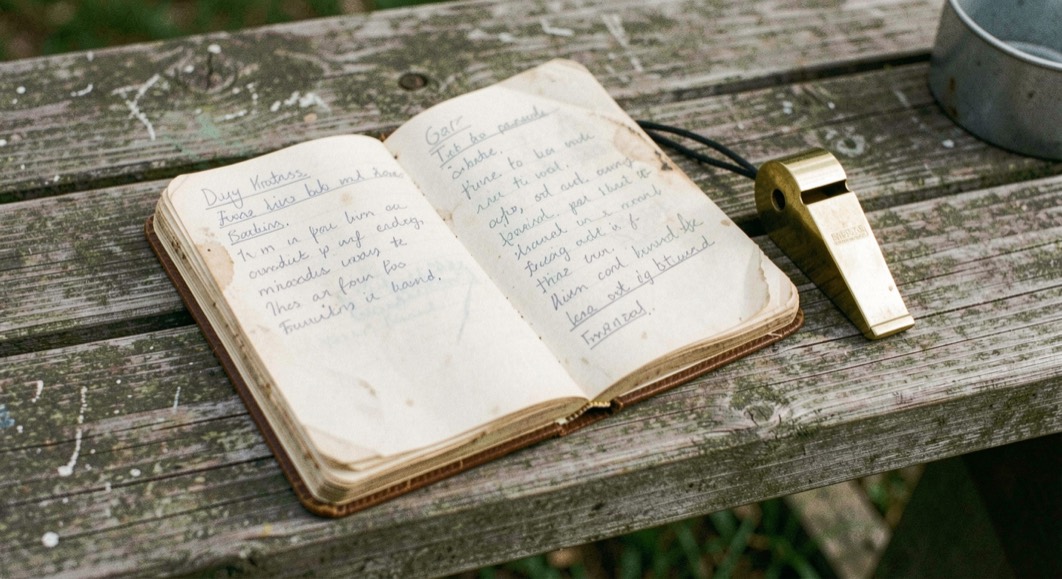
Nothing keeps a newcomer out of retriever work more efficiently than the vocabulary. Half of it is technical, half of it is inherited from hunting, and almost none of it is written down in one place. A handler who does not know what a no bird is cannot follow what just happened at the line, and a reader who thinks blinking means the same thing as popping will misread every report they open.
Each entry below gives the term, what it means, where it applies and the confusion it usually causes, because the confusion is the part that actually costs people time. Entries drawn from a document that has been read carry that reading; entries whose precise meaning belongs to a rulebook nobody here has read at the source say so instead of guessing. That distinction is the whole method, and it is set out in sources and method.
Alphabetical index: area, average, bank running, blind, blinking, break, callback, cast, cast refusal, creeping, delivery to hand, diversion, double, fall, flyer, go bird, handling, hard mouth, holding blind, honor, hunt, JAM, JH, line, lining, mark, marking, marshal, memory bird, MH, no bird, no go, perseverance, placing, points, popping, qualifying score, running order, scored ability, series, SH, single, stake, steady, switch, test dog, trainability, triple, walk up, whistle sit, zero.
Terms of the retrieve
These are the words for the work itself: what the dog is asked to do between the line and the bird. They apply across every program, because every program is describing the same two jobs. Both of them have a page of their own in marks and blinds.
| Term | What it means | Where it applies | The confusion it causes |
|---|---|---|---|
| mark | A bird the dog watched fall and now has to find from memory. | All four programs. | People use it for any retrieve. A retrieve the dog did not see is not a mark. |
| blind | A retrieve of a bird the dog never saw, reached by taking a line, stopping to a whistle and accepting casts. | All four programs. In AKC hunt tests, first required at Senior. | Also the name of the structure a hunter sits in, and of the holding blind at an event. Three different things, one word. |
| single | One bird thrown, one retrieve. | All programs. The Junior level is built on singles. | Simple is not the same as short. A single can be a long way out. |
| double | Two birds thrown before the dog is sent, both to be remembered. | All programs. Required at AKC Senior on land and on water. | Two singles run back to back are not a double. The memory is the test. |
| triple | Three birds thrown before the dog is sent. | All programs. AKC Master requires three falls to be remembered in at least two multiple mark situations. | Counting throws instead of counting what the dog must hold in its head. |
| go bird | The last bird down in a multiple, and normally the first one the dog is sent for. | All programs. | Assuming the dog will always take it first. That is a habit of training, not a rule. |
| memory bird | Any bird in a multiple that is not the go bird, held while the dog works another. | All programs. | Thinking the difficulty is distance. It is usually the order and the angle. |
| fall | The point where a bird lands. | All programs. | Handlers say fall for the bird, the place and the moment. Context decides. |
| area | The ground around a fall in which a dog may reasonably be expected to look. | All programs. | Being in the area is not the same as marking. Judges separate the two. |
| line | Two meanings: the spot the handler and dog work from, and the straight path from that spot to the bird. | All programs. | Almost every sentence at an event uses one of the two and assumes you know which. |
| lining | Sending the dog on an initial direction, chosen by the handler, without help afterwards until a whistle. | Blind work in all programs. | Confused with casting, which is what happens after the whistle rather than before it. |
| cast | A signal, given with the arm and the body after a whistle, that changes the dog's direction. | Blind work in all programs. | A cast is a change of direction, not an encouragement to keep going. |
| whistle sit | Stopping the dog at distance and turning it to face the handler on a single blast. | Blind work in all programs. | Stopping and looking are one action. A dog that stops without turning has not answered. |
| handling | The whole apparatus of directing a dog at distance: line, whistle, cast, repeat. | All programs. | Handling on a mark is allowed but costly. Judges are watching how much of it was needed. |
| hunt | The dog's own search once it is in the area of a fall. | All programs. | A short honest hunt is normal. A long one begins to answer a different question about the mark. |
| steady | Sitting still at the line through the throw, the noise and the fall, and going only when sent. | All programs. At AKC Junior the dog must be steady, though it may be brought to the line on lead with a flat collar and gently restrained. | The Junior lead is read as permission to hold a dog down. It is a backstop for a young dog, not a brake. |
| delivery to hand | Bringing the bird all the way to the handler and releasing it into the hand. | Required from Junior onward in AKC hunt tests. Read in the regulations on September 2, 2026. | Dropping at the feet is not delivery. It is the most common avoidable failure in dogs that mark and swim well. |
Terms of the running of a stake
These describe how a day is organized rather than what the dog does. They travel between programs almost unchanged, because the logistics of running dogs one at a time past two judges are the same everywhere.
| Term | What it means | Where it applies | The confusion it causes |
|---|---|---|---|
| stake | One competition inside an event. A meeting can run several at once. | Field trials, and by extension the entry paperwork of other programs. | Used loosely for level. In a trial it is a specific competition with its own entry. |
| series | One complete setup, run by every dog still entered. | All programs. In AKC hunt tests a qualifying score requires that the dog ran every series held. | A series is not a round of eliminations. It is a test, and the callback comes after it. |
| callback | The judges naming the dogs they want to see in the next series. | All programs. Read in the AKC hunt test regulations on September 2, 2026. | Read as a ranking. It records who the judges still need to see, nothing more. |
| honor | Sitting beside a working dog and doing nothing while that dog is sent. | Required at least once at AKC Senior, mandatory at Master. | Treated as manners. It exists because two dogs share one blind on a real hunting day. |
| walk up | A setup where handler and dog are moving when the birds go down. | Required at least once at AKC Senior, and in at least one series at Master. | People train it as a novelty. It is a normal way for birds to appear on a hunt. |
| diversion | A distraction, thrown or fired, while the dog is already working. | Required at least once at AKC Senior and at Master. | Mistaken for an extra bird. Sometimes it is one, sometimes it is only noise and movement. |
| no bird | A throw or a bird that went wrong, after which the dog is stopped and the setup is rerun for it. | All programs. | Read as a failure. Nothing that happened counts, and a handler who panics creates the only real problem. |
| flyer | A live bird released at a station, as opposed to a dead bird thrown by hand. | All programs, subject to what each level and each event uses. | Assumed to be harder by definition. What makes it hard is that it lands where nobody planned. |
| holding blind | A screen near the line where the next dog waits out of sight. | All programs. | The word blind again, and nothing to do with a blind retrieve. |
| marshal | The person keeping the running order moving and telling handlers when they are up. | All programs. | Not a judge, and not a source of rulings. |
| running order | The sequence in which dogs run, normally drawn. | All programs. | Never printed on a result sheet, although it changed the test between the first dog and the last. |
| test dog | A dog run before the entry to show the judges how the setup behaves. | All programs. | Its performance is not scored and does not appear in any result. |
Terms of judging and scoring
This group is where reading the document matters most, because the words look ordinary and are defined precisely. The AKC hunting test regulations were read at the source on September 2, 2026, in the edition amended July 2021 and issued November 2025, and the entries below carry that reading. The field trial rulebook has not been read here, and its terms say so.
| Term | What it means | Where it applies | The confusion it causes |
|---|---|---|---|
| scored ability | A category of ability judged separately, each on a scale of zero to ten. | AKC hunt tests. Read September 2, 2026. | People imagine one overall score. There are several, and they interact. |
| marking | The ability to see a fall, remember it and go to it. | Scored in AKC hunt tests. | Judged on the line taken and the size of the hunt, not on whether the bird came back. |
| perseverance | The willingness to stay on the job until the bird is found. | Scored in AKC hunt tests. A dog that switches is scored zero here. | Read as toughness. It is measured by what the dog does when the bird is not where it expected. |
| trainability | How readily the dog accepts direction and control from the handler. | Scored in AKC hunt tests. | Not a judgment about intelligence. It is about response under pressure. |
| average | The mean of the judges' scores, applied both per ability and across the test. | AKC hunt tests. Read September 2, 2026. | The overall average is not the only condition. Independent floors apply per ability. |
| qualifying score | A performance meeting all the scoring conditions of the level, after running every series held. | AKC hunt tests. Junior needs at least five in every scored ability and seven overall; Senior and Master keep the seven and add independent averages of at least five in the marking abilities and in the blind abilities. | Assuming the overall seven is enough. One weak column ends a day that looked fine. |
| zero | The lowest score on an ability. Given by both judges on the same ability, it ends the qualification and the callback. | AKC hunt tests. Read September 2, 2026. | Thought of as a bad score. It is a stop, not a deduction. |
| placing | A ranked result, first through fourth, awarded at the end of a stake. | Field trials. | Compared with a pass. A placing is relative to the entry; a pass is measured against a standard. |
| JAM | An abbreviation that appears in trial results below the placings.Read aloud at the line as an award of merit. | Field trials. The conditions attached to it are set in the field trial rulebook, not read at the source on September 2, 2026. | Explained confidently everywhere and defined precisely almost nowhere. No definition is stated here until the document is read. |
| points | Credit accumulated toward a championship title. | Field trials, in the All-Age stakes. Also the basis of the HRC program. | Point schedules are the most copied and most out of date figures in the sport. None is printed here. |
Faults, and what each one is called
Naming a fault correctly is not pedantry, because the name usually contains the diagnosis. Only one entry in this group carries a written consequence read at the source; the others are vocabulary, and what a judge does with them belongs to the day and to the level.
| Term | What it means | Where it applies | The confusion it causes |
|---|---|---|---|
| switch | Giving up on one bird and going to another. | AKC hunt tests: scored zero in perseverance, which prevents qualification in Senior and Master. Read September 2, 2026. | Confused with a dog that hunts wide and comes back. A switch is an abandonment. |
| popping | Stopping on the way out and looking back for help that was not asked for. | All programs, on blinds and sometimes on marks. | Mistaken for obedience. It is the dog declining to take responsibility for its own line. |
| blinking | Finding a bird and leaving it, or avoiding it. | All programs. | Constantly confused with popping. Popping is about the line, blinking is about the bird. |
| cast refusal | Taking a direction other than the one signaled, or none at all. | Blind work in all programs. | A dog that takes the cast and then curves back onto its old line has still refused it. |
| break | Leaving before being sent. | All programs. | Distinct from creeping, which is movement without departure. |
| creeping | Edging forward off the line before the send. | All programs. | Tolerated at some levels and not at others, which is a level question rather than a definition. |
| no go | Refusing to leave the line when sent. | All programs. | Read as stubbornness. It is more often confusion about where the bird was. |
| bank running | Leaving the water to run the shoreline instead of swimming the line. | Water work in all programs. | Called cheating, which describes the handler's feelings rather than the dog's reasoning. |
| hard mouth | Damaging the bird in carrying it. | All programs. | Attributed to temperament far more often than it is actually diagnosed. |
Using this glossary well
- Read the fourth column first. The confusion is usually the reason you looked the word up.
- Check the program column before you carry a definition across. Several of these words shift meaning between rulebooks.
- Treat an entry that names a reading date as settled, and an entry that names an unread document as an open question.
- When two faults sound alike, learn the pair together. Popping and blinking are the classic case, and so are breaking and creeping.
- Say the word out loud at an event before you write it into a training plan. Most of this vocabulary is still learned by ear.
- When a definition here contradicts the rulebook in front of you, write to the desk with the edition you are reading.
Titles and abbreviations
Titles are the part of the vocabulary that ends up in a pedigree, which is why they outlive everything else on this page. Two rules make them readable. Hunting test titles are recorded as suffixes after the registered name. Field trial championship titles are recorded as prefixes in front of it. Those two habits are the fastest way to tell what a string of letters is claiming.
| Abbreviation | Title | What it takes | Reading |
|---|---|---|---|
| JH | Junior Hunter | Four qualifying scores in Junior hunting tests at licensed or member club events. | AKC hunting test regulations, amended July 2021, issued November 2025. Read September 2, 2026. |
| SH | Senior Hunter | Five qualifying scores at Senior, or four with a Junior Hunter already recorded. | Same regulations. Read September 2, 2026. |
| MH | Master Hunter | Six qualifying scores at Master, or five with a Senior Hunter already recorded. | Same regulations. Read September 2, 2026. |
| FC | Field Champion | Championship points accumulated in the All-Age stakes. The schedule is in the field trial rulebook. | Field trial rules. Not read at the source on September 2, 2026. No figure printed. |
| AFC | Amateur Field Champion | The same structure, earned under amateur handling. | Field trial rules. Not read at the source on September 2, 2026. No figure printed. |
| HRC titles | Hunting Retriever Club titles | Earned on accumulated points rather than a fixed number of passes. | HRC official rulebook. Located, not read at the source. No schedule printed. |
| NAHRA titles | NAHRA titles | Earned inside a ladder organized by working ability rather than by age. | NAHRA field test rules. Not read at the source. No schedule printed. |
Common mistakes
- Using mark for every retrieve. If the dog did not see it fall, it is a blind, and the whole job is different.
- Treating popping and blinking as the same fault. One is about the line, the other is about the bird, and they are fixed differently.
- Reading a suffix and a prefix as the same kind of title. Suffixes come from the test programs, prefixes from field trial championships.
- Quoting a definition for a field trial abbreviation from a forum. The conditions live in a rulebook, and this page will not state them until that rulebook is read.
- Assuming a word means the same thing in every program. Several of them do not, which is why the third column exists.
- Learning the vocabulary from results rather than from the line. A result sheet uses the words but never defines them.
Terms that describe a level rather than an action are laid out program by program in the stakes and levels table. The report language these words appear in is taken apart in reading trial results, and the circuit that produced most of this vocabulary is described in AKC field trials explained.